



The Quiet Migration Away from Dedicated Scheduling Tools
Solo founders are leaving Buffer. Not dramatically, not all at once, but steadily – the kind of migration that only becomes visible when you notice how often Zapier comes up in conversations that used to be exclusively about scheduling tools. What started as a workaround for teams already deep in automation workflows has quietly matured into a full content distribution system that undercuts Buffer’s core value proposition.
The shift makes sense when you map how a solo founder actually works. Buffer was built for social media managers with dedicated time blocks for content. Solo founders don’t have that. They’re writing, shipping, responding to customers, and trying to keep social channels alive all at once. Zapier, originally sold as a productivity glue between apps, turns out to be a better fit for that chaotic operating mode than a purpose-built scheduler.

What Zapier Actually Does as a Social Posting Tool
Zapier’s social posting capability isn’t a single feature – it’s a behavior you construct by chaining triggers and actions. A founder can connect an RSS feed from their blog, a new row in a Google Sheet, a published Notion page, or even an email to their own address, and have Zapier push formatted content to LinkedIn, Twitter/X, Facebook Pages, or Instagram Business accounts automatically. No manual scheduling queue. No publishing calendar to manage. The content moves when the source moves.
This architecture is fundamentally different from Buffer’s model. Buffer asks you to load a queue, set time slots, and approve posts before they go out. That workflow assumes you have content ready in batches and time to review before publishing. Zapier’s model assumes the opposite – that content is already living somewhere in your stack and just needs to be redistributed. For founders who write newsletters, maintain a Notion content OS, or update a CRM with customer stories, the content is already there. Zapier just connects the dots.

The trigger options are where the flexibility gets genuinely useful. A founder who publishes a Substack issue can have Zapier automatically pull the title and excerpt, format a short post, and push it to LinkedIn within minutes. Someone who updates a product changelog can have that same update hit their Twitter/X account as a thread starter without touching a scheduling tool. The logic tree in Zapier also allows for conditional posting – publish to Instagram only if the content includes an image URL, skip LinkedIn if the post is tagged “internal,” and so on.
Buffer’s response to this has been to push harder on analytics and team collaboration features, which is the right move for agencies and marketing teams. For solo founders, though, those features are overhead. A solo operator doesn’t need approval workflows or team-level performance reports. They need content to move from where it’s created to where it needs to be seen, with minimal intervention. Zapier does that more directly than Buffer’s current product lineup.
The Cost Equation That Tips the Decision
Buffer’s pricing is straightforward: a free tier capped at three channels, then paid plans that scale by channel count and feature access. For a solo founder managing five or six platforms, the monthly cost adds up quickly – especially when the tool is only being used for its most basic function. Zapier, by contrast, is likely already in the stack. Many founders pay for Zapier to handle CRM syncing, invoice automation, or lead routing. Social posting becomes an additional workflow on a tool they’re already funding.
That’s the hidden cost advantage. It’s not that Zapier is cheaper than Buffer in absolute terms – Zapier’s paid plans can be more expensive. The advantage is that Zapier’s cost is already sunk into other workflows. Adding social posting doesn’t add a new line item to the budget; it adds a new use case to an existing one. For founders who scrutinize every monthly subscription, that’s a meaningful distinction.
Where Buffer Still Holds Ground
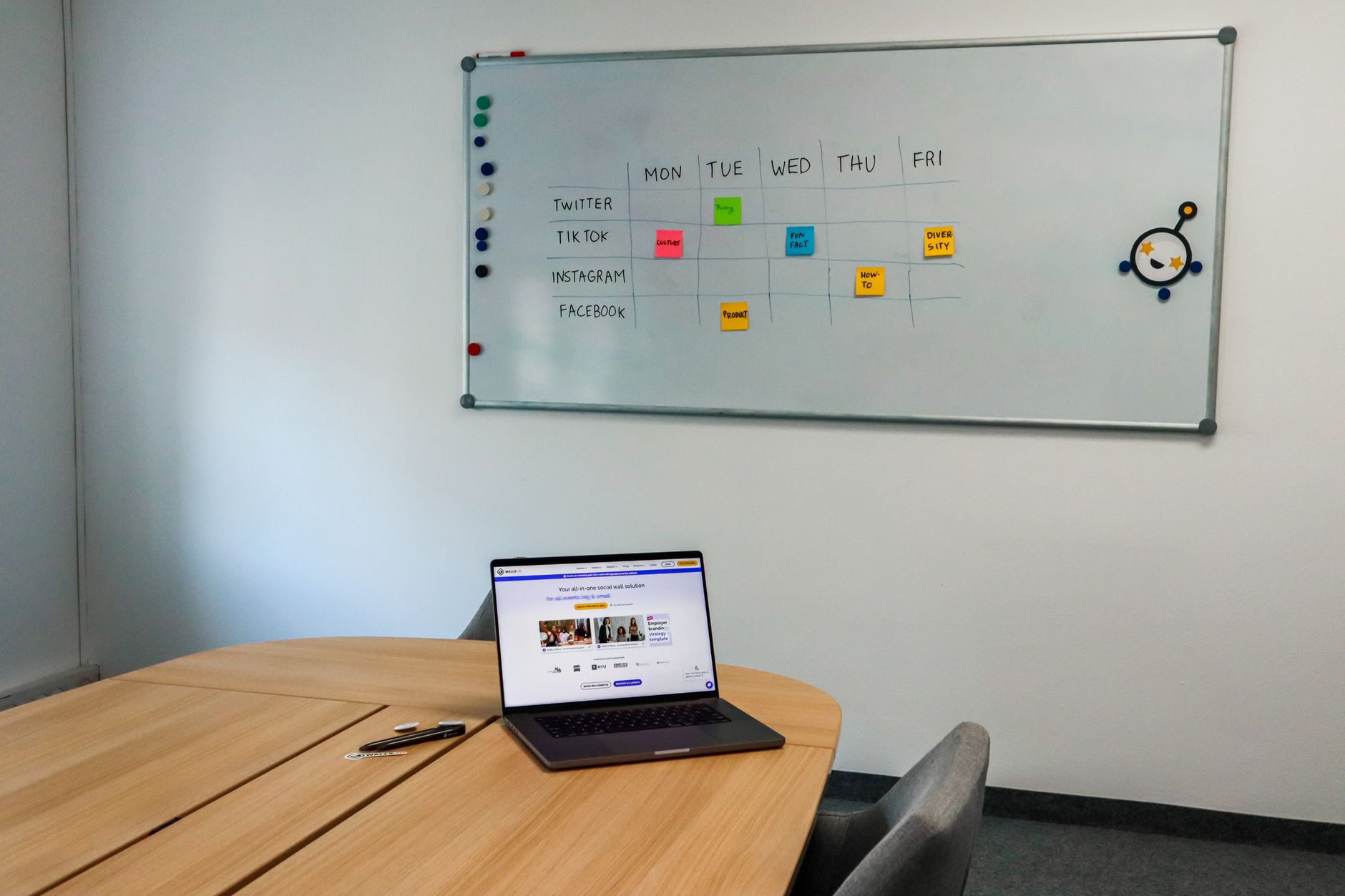
Buffer’s visual scheduling calendar is legitimately better than anything Zapier offers. If you need to see a week’s worth of posts laid out, drag and drop them into different slots, and review how content is spaced across platforms, Zapier cannot match that experience. It’s a code-free automation tool, not a content management interface. The tradeoff is real, and founders who think visually about their social presence will feel it.
Buffer’s Instagram integration is also more polished. Reels scheduling, story posting, and first-comment automation are features Buffer has refined over years of product development. Zapier’s Instagram actions are limited by Meta’s API constraints and lack the same depth. For any founder where Instagram is the primary channel rather than a secondary distribution point, switching to Zapier-only would be a step backward.
There’s also the question of reliability under pressure. Zapier’s multi-step Zaps can fail silently if a source changes format, an API rate limit is hit, or a conditional filter is misconfigured. Buffer posts when it says it will post. For founders who can’t afford to monitor their automation daily, that dependability has real value. Zapier rewards technical confidence; Buffer rewards simplicity. The founders moving to Zapier are, by definition, the ones comfortable diagnosing a broken Zap at 11pm on a Tuesday.
What’s worth watching is how this plays out as more no-code tools expand into automation territory. Notion’s social media OS has already started absorbing content planning functions that once required dedicated tools. If Zapier adds even a lightweight visual scheduler, or if Notion deepens its publishing integrations, Buffer’s solo founder segment doesn’t just shrink – it effectively disappears. Buffer knows this, which is probably why the product roadmap has been leaning so heavily into AI-assisted content creation. The scheduling piece alone isn’t enough to hold the market anymore.
Frequently Asked Questions
Can Zapier fully replace Buffer for social media posting?
Zapier can handle automated social distribution for most platforms, but it lacks Buffer’s visual scheduling calendar and polished Instagram features, making it a partial rather than complete replacement.
Is Zapier cheaper than Buffer for solo founders?
Not always in absolute terms, but founders already paying for Zapier for other workflows can add social posting without a new subscription, making the effective cost much lower.