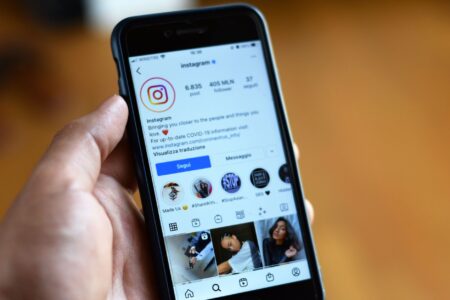



A like takes half a second and asks nothing of the viewer. A save or a send takes a decision, and Instagram’s ranking systems have been built to notice the difference.

Why Intent Beats Applause
The like button was designed to be effortless, and that is exactly its weakness as a ranking signal. People tap it out of habit while their thumb is already moving, often on posts they will not remember a minute later. A platform trying to predict what will keep someone interested needs behavior that costs the viewer something, even if the cost is only a moment of thought. Saving a post says “I want to come back to this.” Sending it says “a specific person needs to see this.” Neither happens by accident.
Instagram’s leadership has publicly described sends as a particularly strong signal for reaching people who do not follow you yet, while likes carry more weight in how your existing audience responds. The logic holds up. A send is a personal recommendation, and a personal recommendation is the strongest evidence that content is worth showing to someone new. It also brings a fresh viewer into the post with built-in context, because a friend vouched for it.
Saves work differently, because they are private. Nobody sees that you bookmarked a post, so there is no social reward for doing it, no performance for an audience, and no reason to do it except genuine usefulness. That makes saves harder to inflate than likes, which can be pumped up by engagement pods, follow-for-follow loops, and reflexive tapping. A signal that is expensive to fake becomes more valuable to a system trying to filter out noise.
For creators and brands, the practical result is that a post with modest likes and heavy saves or sends can outperform one that looks popular on the surface. None of these signals works in isolation, and watch time and completion still matter, especially for Reels. But the old habit of judging a post by its heart count alone now misreads what the algorithm is actually rewarding.
Designing Content That Earns a Save or a Send
Saves come from utility. Checklists, frameworks, step-by-step sequences, templates, comparison guides, and reference material all give a viewer a reason to bookmark. The test is simple: would someone want to find this again in three weeks? If the answer is no, the post may still earn a like, but it will not earn a save. Carousels suit this goal well because multiple slides can hold a full process, and a closing slide that recaps the key points gives the viewer something worth keeping.
Sends come from recognition and social currency. A post that makes someone think “this is exactly my team” or “my sister needs to see this” gets forwarded because it lets the sender say something without writing a message. Relatable humor, sharp niche observations, and useful warnings travel well in direct messages. Specificity drives this more than polish does. The more precisely a post describes a certain kind of person or situation, the more likely it is to be sent to that exact person.

Generic inspiration collects likes. Specific usefulness collects saves.
The first line of a caption and the first frame of a visual carry most of the weight, because they have to promise something worth keeping before the viewer scrolls on. Direct prompts can help, since a line like “send this to the colleague who keeps asking about this” lowers the effort of acting. Captions also double as search material, a shift covered in Why Instagram’s Shift to Search Is Rewriting Caption Strategy, so one keyword-aware sentence can serve both discovery and the save.
The most common mistake is treating the prompt as the strategy. Slapping “save this for later” on a thin post trains an audience to ignore the phrase, and it erodes trust when the content does not deliver. A save that never leads to a return visit is also an empty win, because the bookmark sits unopened while the algorithm records a positive signal that the content did not earn on its own merits. The prompt should be a nudge attached to content that already deserves the action, not a substitute for it. Brands that treat every post as a reference document will also find their feed becomes dull, so mixing in posts built purely for sharing keeps the account from feeling like a filing cabinet.
Reading Your Own Numbers Differently
Instagram’s insights already break out saves and shares for each post, and the useful move is to compare them against reach rather than against each other in raw counts. A post that reached a small audience but drew a high proportion of sends deserves a second look, because the format or topic may be doing something your bigger posts are not. Keeping an informal log of which posts produce saves and which produce sends will show patterns quickly. Practical content tends to collect saves, while identity-driven or humorous content tends to collect sends, and most accounts need both.

There is an uncomfortable side to this. A post that draws a flood of private sends can look like a flop on the grid, with a low like count sitting under it for anyone to judge. If the most valuable response to a post is one that nobody else can see, how long before creators stop caring about the number everyone else can?